What to Look for in a Mini Excavator Supplier: ESCO Bucket Teeth, Backhoe Suppliers, and Quality Checks
-
What should I look for in a mini excavator supplier before the first order?
-
What's the difference between a backhoe loader supplier and a backhoe supplier?
-
Are ESCO bucket teeth worth specifying?
-
How do I check whether bucket teeth will fit my excavator bucket?
-
What hidden costs should I watch for when a backhoe supplier quotes a low price?
-
How do I know if a supplier's quality team is doing their job?
-
Do mini excavators need different bucket teeth than full-size machines?
-
Should I ask for a named contact like Ross Gallatin at ESCO Construction Company?
Here are the questions I'd ask before ordering wear parts or attachments. This is what to look for in a mini excavator supplier, not just in the machine itself, but in the parts that hit the ground. I'm the quality/brand compliance manager at an engineering and construction machinery company. I review wear parts before they're cleared for customers—roughly 200 unique items per year. In 2025, I rejected about 6% of first deliveries because the spec didn't match the approved drawing. The list below is the short version of the checklist I use.
- What should I look for in a mini excavator supplier before the first order?
- What's the difference between a backhoe loader supplier and a backhoe supplier?
- Are ESCO bucket teeth worth specifying?
- How do I check whether bucket teeth will fit my excavator bucket?
- What hidden costs should I watch for when a backhoe supplier quotes a low price?
- How do I know if a supplier's quality team is doing their job?
- Do mini excavators need different bucket teeth than full-size machines?
- Should I ask for a named contact like Ross Gallatin at ESCO Construction Company?
What should I look for in a mini excavator supplier before the first order?
Start with the spec sheet, not the price list. A serious mini excavator supplier should be able to tell you the material grade, casting standard, hardness range, and how they handle part numbers for adapters, cutting edges, and teeth. If they can't, the rest of the conversation gets hard.
I also look at replacement part availability. A bucket tooth that costs $8 but takes six weeks to get is not a good deal when you're halfway through a job. Ask about stock, lead time, and whether the supplier will substitute a different tooth without telling you. Substitution is a red flag unless it comes with a revised spec and a lower price.
One more thing: let them tell you what's not included. Shipping, packing, export documents, and minimum order quantities can all show up after the quote. I've learned to ask "what's NOT included" before "what's the price."
What's the difference between a backhoe loader supplier and a backhoe supplier?
The wording is easy to mix up. A backhoe loader supplier typically sells the machine—the loader with the backhoe attachment on the rear. A backhoe supplier, in the wear parts world, sells the bucket, bucket teeth, adapters, cutting edges, and pins that go on that machine.
If you're comparing full machine dealers, ask about uptime, service response, and financing. If you're comparing wear parts suppliers, ask about casting quality, dimensional control, and whether the tooth stays on when you're digging in rock. I work on the wear parts side, so that's where I spend my time.
Are ESCO bucket teeth worth specifying?
I don't like blanket "yes, buy the premium option" answers. What I can say is that ESCO bucket teeth get specified because the design is tied to a system: tooth, adapter, and cutting edge are drawn to match. That makes fit predictable. For a contractor, predictable fit matters more than the initial price.
That said, you don't have to buy a brand just because a drawing says "ESCO equivalent." You do have to verify that the replacement part actually matches the tooth system. An "equivalent" that's a little loose at the bearing surface will work for one shift, then work its way out. I've watched that happen more than once.
If you need OEM or private label parts, ask the supplier which design standard they are following. If they can show you a drawing and a test report, the name on the box matters less. If they can't, the name matters a lot.
How do I check whether bucket teeth will fit my excavator bucket?
First, get the machine and bucket details: make, model, bucket width, and cutting edge thickness. Then ask for the tooth system number. Teeth are usually matched to a specific adapter profile, not a "universal" size. A universal claim is a warning sign; nothing fits all equipment.
Check the seating area. Even with the correct tooth, a worn adapter will make the tooth loose. If I'm reviewing a new supplier, I ask for photos of the adapter before and after installation. That sounds simple, but it catches a lot of problems—weld distortion, bore offset, painted-over cracks.
For weld-on adapters, ask about the grade of the base material. Some adapters are cast steel and some are cast iron; they can look similar but behave very differently in service. The same logic applies to full excavator buckets: verify the mounting bracket spacing and pin size before you weld anything.
What hidden costs should I watch for when a backhoe supplier quotes a low price?
Low price per tooth is not the same as low total cost. The other costs are often in the fine print: freight by weight, pallet fees, extra charges for certification documents, and lead time that turns into a premium later.
The vendor who lists all fees upfront—even if the total looks higher—usually costs less in the end.
I'll say that again because it's important: the transparent quote is the cheaper quote. The hidden-fee quote is the one that gets you with a $200 rush charge after you're stuck.
I'd also watch for "same spec" language. If a supplier says "it's the same as the original" but can't show a drawing or a hardness report, don't accept it. That's not a spec; it's an assumption.
How do I know if a supplier's quality team is doing their job?
Ask for the quality manager's name and the last rejection report. You don't need sensitive data; you need evidence that they measure, reject, and correct. When I implemented our verification protocol in 2022, the rejection rate on first deliveries dropped by a third. That's the kind of effect I look for in a supplier's process.
Also, run a sample test. In Q1 2024, we measured bucket teeth from three shortlisted suppliers against our drawing. Two were within tolerance. One wasn't. The one that wasn't had a lower price and a great sales pitch. To be fair, they weren't a scam; they just weren't set up for our tolerance.
That test didn't cost much. Buy a few samples, measure them, install them, and run them for a day. If a supplier won't send samples, that's a red flag. ISO 9001:2015 tells you they have a documented system; it doesn't mean every batch is perfect. For castings, an ASTM standard such as A148/A148M gives you a material baseline. If they quote a standard, ask for the test report that goes with it. Not just a generic certificate—or rather, ask for the heat number and the hardness values.
Do mini excavators need different bucket teeth than full-size machines?
Generally yes. Mini excavator buckets are built lighter and use smaller tooth systems. The working conditions are different too. I want to say most compact bucket teeth are for mixed soil, not heavy rock, but there are serious rock options if you need them. Don't quote me on the exact sizes without checking your bucket rating.
The bigger issue is the adapter's weld and the cutting edge thickness. On a mini excavator, the cutting edge is thinner, so a full-size bucket tooth can be overkill and actually cause stress problems. A good mini excavator supplier will ask about your bucket model, not just your machine's tonnage.
I used to think a tooth was a tooth. That assumption cost me a few hours of field time. Now I treat every tooth system as a separate part until I have a drawing that says otherwise.
Should I ask for a named contact like Ross Gallatin at ESCO Construction Company?
If a search for "Ross Gallatin mailto: ESCO Construction Company" brought you here, you're trying to find a human before you buy. That's a good instinct. You should ask for the person who owns the technical side, not just the person who answers the phone.
Named contacts create a paper trail. When we had a batch rejected in 2025 because the hardness values were off, the vendor's quality manager had to own it. That only happened because we had a named contact and a written spec from the start.
Bottom line: ask for a name and a drawing. If a supplier cannot give you either, the next possible question is whether you need a different supplier.
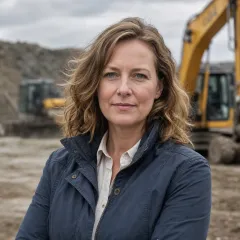
Charlotte Avery is an earth-moving machinery analyst covering excavators, mini excavators, loaders, skid steers, dozers, graders, compactors, and attachments. She uses ISO 6165 machine classification and ISO 20474-1 safety requirements while examining operating mass, rated payload, breakout force, ground pressure, stability, visibility, guarding, and attachment compatibility. Her work helps contractors and fleet buyers match machine size, undercarriage, transport limits, and protective features to terrain, duty cycle, and jobsite access.