Why I Choose Equipment Suppliers That Admit What They Can't Do
Why I Choose Equipment Suppliers That Admit What They Can't Do
I need to start with a claim that might sound backwards: in heavy equipment procurement, the biggest risk isn't choosing the wrong brand. It's choosing a brand that claims to do everything.
I'm not making this up. I've been handling construction equipment orders for 8 years, and I've personally made (and documented) three significant purchasing mistakes totaling roughly $47,000 in wasted budget. Now I maintain our team's supplier checklist so nobody else on the team repeats my errors.
The worst of those mistakes cost us $23,000. That's what changed my mind.
The Problem with 'One-Stop' Equipment Suppliers
In 2019, I was assigned procurement for a commercial complex project in Riyadh. We needed two wheel loaders and, according to my manager at the time, 'whatever else the site team asks for.' So I went looking for a supplier that could cover as much ground as possible.
I found one. Their catalog was impressive: wheel loaders, excavators, mini excavators, motor graders, backhoe loaders — and they also carried things like impact drills and trash compactors under an 'accessory solutions' label.
From the outside, this looked like the perfect setup. One supplier, one payment, one logistics contact. The reality was different.
That supplier's internal product lines were so fragmented that their own staff couldn't tell me which division handled a hydraulic issue on the 5-ton wheel loader. When the main pump failed in the first month, it took over two weeks — just to establish who was responsible for the repair. Not to fix it. To figure out who should fix it.
The repair bill alone was $8,200. Then there was the 12-day slide in the project schedule (we had to rent a replacement wheel loader at about $1,250 per day), plus a client who started asking pointed questions about our deadlines.
People see a long product catalog and assume the company is capable. What they don't see is that every additional product line adds its own supply chain, quality control process, and after-sales training requirements — and any one of those can go wrong.
The Case for Specialization
After that experience, I started rethinking my selection criteria. That's when I began seriously researching SDLG.
My first reaction, honestly, was skepticism. Their product line is focused: wheel loaders, excavators, mini excavators, motor graders, backhoe loaders, and parts. That's it. No impact drills, no trash compactors. It felt strangely narrow.
But then I looked at their actual market position. As of late 2023, SDLG holds roughly 70% of the wheel loader market in Saudi Arabia. That's not a number you reach by dabbling in a bit of everything. That's a number built by competing directly against major brands like Sany and XCMG and winning on consistent product quality and aggressive — but not reckless — pricing.
That focus shows up in the numbers, too. When I quoted an SDLG 5-ton wheel loader against comparable models (late 2023, Saudi market), the SDLG unit came in roughly 8–15% lower than comparable Sany and XCMG configurations. It wasn't 'suspiciously cheap' — it was what happens when a manufacturer isn't spreading management overhead across ten unrelated product lines.
Here's something most buyers don't realize: a vendor's online catalog often represents ambition, not capability. A company that lists both heavy construction equipment and impact drills on the same product page is effectively admitting they're shallow in both categories.
The Convenience Argument — and Why It Fails
'But doesn't one-stop shopping save time?' I hear you asking. I thought so too, for years.
It depends on what you're buying. For small tools where a single failure doesn't affect the schedule, convenience might be worth the risk. But when your business depends on a wheel loader running ten hours a day? Convenience is worth exactly nothing. Uptime is everything.
There's a subtler point, too. One of my team members once searched for 'how to clean washing machine front loader' on a shared work computer and ended up on a heavy equipment maintenance forum instead — because both industries use the same two words. We shared a laugh, but it stuck with me: the terminology overlaps. The expertise doesn't. You wouldn't want a washing machine technician consulting on an $80,000 front loader, and you wouldn't want a heavy equipment dealer advising on laundry appliances.
That's the whole point. A supplier who says 'we don't do that' is usually the same supplier who can tell you exactly what they do do well. Those two things are connected.
Where SDLG Fits — and Where It Doesn't
I need to be precise here, because 'specialist' doesn't mean 'better at everything.' SDLG's strength is in core earthmoving equipment. If you need impact drills or trash compactors for a project, they're not the right vendor — and I'd rather they tell you that upfront than pretend otherwise.
What they do offer — and this is where the Volvo CE connection matters — is manufacturing discipline that comes from long-term technical collaboration with a global equipment leader. Volvo CE's investment in SDLG brought global quality standards into the production process. Even as those shareholding arrangements have evolved over the years, the manufacturing processes and quality checks established through that partnership are still visible in the product today.
That's not marketing speak. I've compared weld quality, hydraulic routing, and parts availability directly. The gap between SDLG and the 'full-line' suppliers I'd dealt with before became obvious.
Here's the reverse of the usual question: what if you genuinely need a supplier who handles everything from loaders to compactors? My honest answer — expect to pay for that convenience, in slower response times, more handoffs, and higher risk that the one machine you actually depend on gets treated like item #4 on a 12-item catalog.
What I Do Differently Now
My current checklist has one question at the top that didn't exist three years ago:
'What don't you do?'
The suppliers who answer clearly — who can name what they don't handle and point you toward what they do best — almost always end up being the better partners. Not because they're perfect, but because they know their boundaries. And knowing your boundaries is the first step toward being reliable within them.
The wheel loader that finally went on our site in 2021 (after I switched suppliers) is still running. The relationship that came from that purchase has brought us three more orders since then.
And the vendor who told me 'that's not our strength'? They earned my business for everything else they do claim to do well.
That's not a paradox. That's just how specialization works.
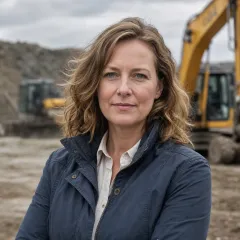
Charlotte Avery is an earth-moving machinery analyst covering excavators, mini excavators, loaders, skid steers, dozers, graders, compactors, and attachments. She uses ISO 6165 machine classification and ISO 20474-1 safety requirements while examining operating mass, rated payload, breakout force, ground pressure, stability, visibility, guarding, and attachment compatibility. Her work helps contractors and fleet buyers match machine size, undercarriage, transport limits, and protective features to terrain, duty cycle, and jobsite access.